  
Tonight Thursday October 9th at 7:00pm EST The Addict's Mom will host a very special Live Video Online Meeting on In the Rooms www.intherooms.com.
We will speak to Addict's Dads who will bravely "Share Without Shame."...
Will you join us and support them by coming on the The Addict's Mom Live Online Video Meeting tonight on In the Rooms?
Sign up for f.ree, please note when signing into in the rooms you must use Google Chrome or Firefox. After you sign in join the Addict's Mom group at http://www.intherooms.com/group/view?gid=1806
Of course, nobody knows what an addict's dad feels as much as an addict's mom.
If you are an Addict's Dad and would like to join in and help us "Break the Stigma" and "Shatter the Shame" there is still time.
Please call me ASAP at 954 309-0992.
Please remember all participants of this show can remain anonymous.
Thank you
Barbara Theodosiou
Proud Founder of the Addict's Mom and the Addict's Dad
Visit The Addict's Mom at: http://addictsmom.com/?xg_source=msg_mes_network
|
Friday, October 10, 2014


Thursday, October 9, 2014
Hi Everyone,
Please join us at our "Christ centered" Addictions Seminar - All are Welcome!
Location: Davisville Church, 325 Street Rd – Southampton, PA 18966
Time: (8am-Noon)
> The Heart of Addiction - Pastor Glen Marshall
(co-author of Reclaiming God's Original Intent for the Church) NavPress
> Sexual Brokenness - Andy & Liz Moore, Shame to Hope Ministry
Refreshments Included - (flyer attached).
Please RSVP ASAP and help get the word out.
Thanks,
Dan Gavin Sr
Commentary: Parental Engagement Isn’t Rocket Science
October 8th, 2014/
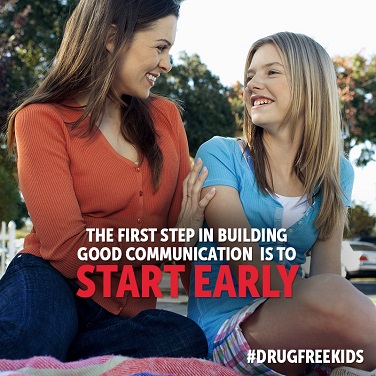 As a parent, you have the greatest power to influence your children – even your teenage children. You have more power than any law; any peer pressure; any teacher or coach; any religious leader; any music, film, or website; movie star, or athlete – even more than any sister, brother, aunt, or uncle.
Parental engagement isn’t rocket science. It’s hands-on parenting. It’s relaxing with your kids, having frequent family dinners, supervising them, setting boundaries, instilling values, and establishing standards of behavior (and consequences for failure to meet those standards). It’s showing interest in their school, friends, and social activities; loving and disciplining them; and being a good role model.
You can empower your children to make sensible, healthy choices throughout their teen years. The key to “parent power” is being engaged in your children’s lives. Children of hands-on parents are far less likely to smoke, drink or use drugs – and those who reach age 21 without using are almost certain never to do so.
It is not necessarily easy to guide your child down the path of healthy decision making. This is especially true in today’s world, which seems to glamorize teen substance use and risky behaviors, in large part, through the recent explosion of technology and social media.
With doing homework assignments on laptops, text messaging friends, watching videos online and talking on cell phones, today’s teens grow up in a world of technology that you may never have experienced when you were their age. Virtually every tween and teen is “connected,” and more than a third have smartphones that provide instant, on-the-go access to the Internet.
Of course, such technology tools can provide teens with information you could only have dreamt of having when you were a teen. But just as positive and appropriate content is available online to your child, so too is negative and inappropriate information about drugs and alcohol. In fact, by the age of 14, half of kids on social media sites like Facebook, Instagram and Twitter have been exposed to pictures or videos of kids their age drinking, using drugs, or passed out.
Teaching your young child appropriate online behavior should be no different than instilling other values in them, like telling the truth, being fair and not cheating on tests or in games.
When we surveyed teens across the country they were asked who has the biggest influence on what they consider appropriate or inappropriate behavior when going online or using a cell phone, 58 percent said their parents and only 18 percent said their friends. So what you may lack in tech savvy, you can more than make up for in “parent power.”
That’s the best way to insure that your child will use technology responsibly – even as she becomes more proficient on a cell phone or iPad. There’s a lot of dangerous stuff on the Internet, so just as you would warn your child about steering clear of a dangerous neighborhood, make sure they’re staying away from the dangerous areas online, too.
Parenting is an art, not a science. Being engaged in your children’s lives doesn’t require being a supermom or superdad. It simply means using your strengths and taking advantage of opportunities, both on the computer and away from it, to be a good parent.
Joseph A. Califano, Jr.
Author of the revised and updated book, How to Raise a Drug Free Kid: The Straight Dope for Parents; Founder of The National Center on Addiction and Substance Abuse at Columbia University; Former U.S. Secretary of Health, Education, and Welfare
Treating Substance Abuse in People with Severe Mental Illness Can Reduce Violent Acts
October 8th, 2014/

Treating substance abuse issues in a person with severe mental illness will reduce the risk they will commit violent acts, a new study suggests. Health professionals have disagreed about whether to treat substance abuse or mental illness first in people who are dealing with both.
While most people with mental illness are not violent, those who have severe mental illness are more likely than those in the general population to commit violent acts, HealthDayreports.
“We were surprised to find that the severity of the patient’s psychiatric symptoms was not the primary factor in predicting later aggression. Rather, the patient’s substance abuse was the factor most closely associated with future aggression,” study co-author Clara Bradizza of the University at Buffalo Research Institute on Addictions said in a university news release.
The study included 278 patients, who were followed for six months after enrolling in an outpatient treatment program for substance abuse and mental illness.
“Our findings suggest that treatment attendance is very important for these individuals and treatment programs should include interventions that are likely to decrease substance abuse, as this may provide the additional benefit of reducing the risk of later aggression among dual-diagnosis patients,” Bradizza said.
The findings appear in the Journal of Substance Abuse Treatment.
FDA Officials: Zohydro Approval Warranted
October 8th, 2014/
After a group of activists called on the head of the Food and Drug Administration (FDA) to quit over the approval of the painkiller Zohydro, three FDA officials say the drug’s approval was warranted.
The officials say it is misguided to advocate for restricting the use of one opioid, instead of addressing the underlying issue of widespread abuse and inappropriate prescribing, The Wall Street Journal reports.
Last month, a coalition called FedUp! called on FDA Commissioner Margaret A. Hamburg to quit. The coalition, comprised of doctors, addiction specialists and family members who have lost loved ones to prescription drug overdoses, criticized Hamburg’s defense of the FDA’s decision to approve Zohydro ER, a pure hydrocodone drug. Zohydro was approved for patients with pain that requires daily, around-the-clock, long-term treatment that cannot be treated with other drugs. In December 2012, a panel of experts assembled by the FDA voted against recommending approval of Zohydro ER. The panel cited concerns over the potential for addiction.
The FDA officials wrote in the Journal of the American Medical Association, “The problem of opioid overdose demands well-informed policies. The actions taken by FDA may help to reverse the epidemic…Policies that focus on a single drug can divert focus from broader, further-reaching interventions… The concerns over Zohydro ER should be seen in the greater context of the opioid epidemic. Singling out one drug for restrictions is not likely to be successful.”
In the opinion piece, the FDA officials say the agency has taken steps to address the need for painkillers with tamper-resistant features. They note that “although this is an appealing policy solution, the science of abuse deterrence is uncertain and evolving… No marketed opioid with purported abuse-deterrence technologies has been shown to deter oral abuse – the most common route – or to reduce addiction or death.”
|


Subscribe to:
Posts (Atom)