Commentary: Alcohol Awareness Month: Help for Today, Hope for Tomorrow

Alcohol is the number one drug problem in the United States
and it impacts every single person in our country, either directly or
indirectly. Each April since 1987, the National Council on Alcoholism
and Drug Dependence, Inc. (NCADD) has sponsored NCADD Alcohol Awareness
Month to increase public awareness and understanding, reduce stigma,
encourage individuals and families to seek help and to engage local
communities in bringing attention to alcoholism and alcohol-related
problems.
This April, NCADD has chosen the theme, “Help for Today, Hope for
Tomorrow.” During the month of April, NCADD’s national network of
affiliates as well as schools, colleges, churches, and countless other
community organizations will sponsor thousands of activities that create
awareness and encourage individuals and families to get help for
alcohol-related problems.
Why is Alcohol Awareness Month so important?
18 million people age 18 and older have an alcohol use disorder.
Alcohol causes about 80,000 deaths per year. It is the third leading preventable cause of death in the U.S.
Alcohol costs our society $225 billion in lost productivity, health care, accidents, etc.
One in four children grows up in a home with an alcohol problem.
18 million people age 18 and older have an alcohol use disorder.
Alcohol causes about 80,000 deaths per year. It is the third leading preventable cause of death in the U.S.
Alcohol costs our society $225 billion in lost productivity, health care, accidents, etc.
One in four children grows up in a home with an alcohol problem.
Of particular concern to NCADD is alcohol use by young people because
it is extremely dangerous. Alcohol is directly associated with traffic
fatalities, violence, suicide, educational failure, alcohol overdose,
prescription drug overdose, unsafe sex and other problem behaviors.
Annually, over 6,500 people under the age of 21 die from alcohol-related
injuries and thousands more are injured.
Here are some specific facts as they relate to young people and alcohol:
Those who begin drinking before age 15 are four times more likely to develop alcoholism than those who begin at age 21.
More than 1,700 college students in the U.S. are killed each year—almost five per day—as a result of alcohol-related injuries.
Underage alcohol use costs the nation an estimated $62 billion annually.
Those who begin drinking before age 15 are four times more likely to develop alcoholism than those who begin at age 21.
More than 1,700 college students in the U.S. are killed each year—almost five per day—as a result of alcohol-related injuries.
Underage alcohol use costs the nation an estimated $62 billion annually.
Reducing underage drinking requires a cooperative effort from
parents, schools, community organizations, business leaders, government
agencies, the entertainment industry, alcohol manufacturers/retailers
and young people.
Alcohol awareness is essential for the health of our country. As a
nation, we need to wake up to the reality that for some, alcoholism and
addiction develop at a young age and that intervention, treatment and
recovery support are essential for them and their families. And, as a
result of NCADD’s work and countless others, millions of individuals and
families are living life in recovery.
For more information about NCADD Alcohol Awareness, visit the NCADD website at: www.ncadd.org.
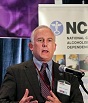 Robert J. Lindsey
President/CEO of NCADD

