New England Governors Devise Plan to Tackle Heroin and Painkiller Abuse
/By Join Together Staff
June 18th, 2014/
1

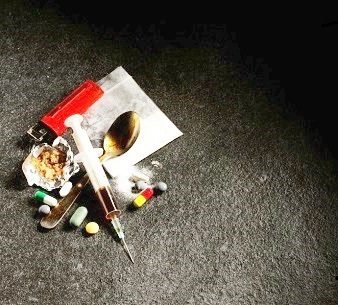
The governors of five New England states announced Tuesday they are working together to tackle heroin and prescription painkiller abuse, The New York Times reports. The governors of Vermont, New Hampshire, Connecticut, Rhode Island and Massachusetts described the agreement at a press conference.
The states will share data on painkiller prescriptions, in an effort to stop “doctor shopping” by patients trying to obtain pills from multiple doctors. They also plan to formulate agreements among their state Medicaid programs, so that low-income patients in one state can be treated for addiction in facilities in another state.
“This epidemic has affected too many of our families and communities, but if we work together, we can recover together and we will come out of this crisis with strength and hope,” Massachusetts Governor Deval Patrick said in a news release. “Each of the New England governors has taken strong action to combat opiate abuse in their own states, and now we are acting together as one region to take on this challenge.”
The group will also work with Maine, Governor Patrick said. In the future, the states hope to work with New York and Canada, the governors noted.
The states will partner with Brandeis University’s Prescription Drug Monitoring Program Center of Excellence, which will analyze data from each state’s prescription monitoring programs. The initiative will focus on prescription drugs that often lead to heroin abuse. Brandeis researchers have found that areas with high levels of prescription drug abuse often have high levels of heroin abuse three years later, the article noted.
Drug Maker Will Study ADHD Medication in Preschool Children
/By Join Together Staff
June 18th, 2014/
0
The manufacturer of the attention deficit hyperactivity disorder (ADHD) drug Vyvanse has agreed to study the drug in preschool children, at the request of the U.S. Food and Drug Administration (FDA).
The company, Shire, also makes the ADHD drug Adderall, the only such drug approved to treat children under age 6 in the United States.
A government study published last month found more than 10,000 toddlers in the United States are receiving medication for ADHD outside established guidelines. The report found children covered by Medicaid are most likely to receive drugs such as Ritalin or Adderall.
The American Academy of Pediatrics does not have guidelines for use of ADHD medications in children ages 3 and younger, because their safety and effectiveness in that age group has not been established.
Because so many young children are taking ADHD drugs, the FDA asked for additional information on the effects of the drugs in this population, according to Reuters.
Shire said the company is designing three clinical trials for children ages 4 to 5, which are expected to begin in the first half of 2015. One study will investigate how the body absorbs, breaks down and excretes the drug. Another will look at the drug’s safety and effectiveness in young children, and the third will test the drug’s safety over a longer period.
ADHD drugs have been linked with growth suppression in children, the article notes. They also can cause hallucinations, mania and delusions.
North Carolina Opioid Overdose Prevention Program Dramatically Cuts Deaths
/By Join Together Staff
June 18th, 2014/
0
A North Carolina opioid overdose prevention program has succeeded in dramatically cutting overdose deaths in one county, according to Medscape. The program is now being rolled out statewide.
Addiction experts discussed the program, called Project Lazarus, at the recent International Conference on Opioids.
Project Lazarus was implemented in Wilkes County, a socioeconomically depressed area in the foothills of the Appalachian Mountains. Many residents have chronic pain because of physically demanding jobs in the logging, farming and textile industries. The county has experienced extremely high rates of opioid overdose deaths. In 2007, the county had the third highest drug overdose death rate in the United States.
Overdose deaths decreased 69 percent in Wilkes County between 2009 and 2011, with little change in how many residents received an opioid pain reliever. Emergency department visits for overdose and substance abuse decreased 15 percent between 2009 and 2010 in the county, compared with a 6.9 percent increase in the rest of North Carolina.
“More opioid prescriptions don’t automatically mean more deaths. It is possible to deliver good pain relief without a heavy overdose burden. But it takes the whole community to make it happen,” said Fred Wells Brason II, Executive Director of Project Lazarus.
The project holds individual education sessions with doctors and continuing medical education sessions on pain management at local hospitals. The project encourages doctors to implement opioid treatment agreements with patients, and to use the state prescription monitoring database, which helps them identify and prevent “doctor shopping.”
Other initiatives include working with hospital emergency departments to reduce the number of pills prescribed, partnering with law enforcement on medication “take-back” programs, and working with mental health centers to increase addiction treatment services. The project has also received funds to purchase and distribute naloxone kits for reversal of overdoses.
States Scramble to Respond to Heroin Epidemic
/By Join Together Staff
June 17th, 2014/

State governors, legislatures and law enforcement across the country are scrambling to respond to the resurgence of heroin, USA Today reports.
“It’s really on the top of everyone’s radar from a public health perspective,” said Thomas MacLellan, Director of Homeland Security and Public Safety for the National Governors Association.
New heroin bills were introduced in at least 18 state legislatures, the article notes. The measures range from leniency for low-level heroin offenders, to permitting easier access to the opioid overdose antidote naloxone. Some states are considering tougher sentences for drug trafficking involving heroin.
Governor Deval Patrick of Massachusetts declared a public health emergency earlier this year, after deaths from heroin and opioid drugs rose more than 90 percent since 2002. The state will spend $10 million to create a court diversion system to provide treatment for non-violent drug offenders. Massachusetts will also devote an additional $20 million to the state’s drug treatment system.
Governor John Kasich of Ohio agreed to enroll his state in a Medicaid expansion under the Affordable Care Act in response to the heroin crisis, according to the newspaper. Kasich, a Republican, decided to accept federal assistance despite the political consequences, because of the drug’s toll on state residents.
In January, Vermont Governor Peter Shumlin said his state is suffering from a “full-blown heroin crisis.” In his State of the State Message, Governor Shumlin said he wants officials to respond to addiction as a chronic disease. He focused his entire speech on drug addiction and its consequences.
Advocates in a number of states are pushing for changes to laws to allow families to petition courts to intervene and order addiction and rehab treatment for loved ones addicted to heroin, even if they have no criminal record.
Police Increasingly Use Overdose Antidote Naloxone
/By Join Together Staff
June 17th, 2014/
A small but growing number of police officers are using the opioid overdose antidote naloxone, as they respond to more cases of heroin and opioid pill overdoses, according to The New York Times.
Naloxone has been used for many years by paramedics and emergency room doctors. Supporters of providing the antidote to police say the officers are often the first to arrive at the scene of an overdose.
The antidote is administered by nasal spray. The medication blocks the ability of heroin or opioid painkillers to attach to brain cells. The U.S. Office of National Drug Control Policy is encouraging police departments to carry the antidote.
Last week, New York Governor Andrew Cuomo committed funds to ensure emergency medical workers have naloxone. In May, New York City Police Commissioner William Bratton announced the city’s police force will soon be trained and equipped with the antidote. “Officers like it because it puts them in a lifesaving opportunity,” he said.
Boston and San Diego are among the cities preparing naloxone programs for their police departments. Currently about two dozen of the nation’s 18,000 police departments have naloxone programs or are establishing them. “This is a huge change for policing,” said Chuck Wexler, the Executive Director of the Police Executive Research Forum. “You’re going to see this spread across the country.”
The Massachusetts city of Quincy was the first to require all police officers on patrol to carry naloxone, also known as Narcan. Last year, the city reported a 95 percent success rate with the treatment.
“Once in a while, you’ll get pushback from officers or the public — why are we saving junkies?” Quincy Police Chief Paul Keenan said. “But our officers were going to too many houses to explain to families that their loved ones had passed away. We embraced it and we ran with it.”
Latest Addition to Heroin Treatment Arsenal: Recovery Coaches
/By Join Together Staff
June 17th, 2014/
Some people struggling to overcome an addiction to heroin are getting help from recovery coaches. The use of coaches is based on the idea that addiction is a lifetime disease.
There is growing interest across the country in using recovery coaches to help people addicted to heroin, according to Robert Lubran, Director of the Division of Pharmacologic Therapies at the Substance Abuse and Mental Health Services Administration. New York state is paying for coaches to help treat addiction through its Medicaid program.
“This is an evolving field,” Lubran told WBUR. “[We are] learning more and more about the best ways to treat addiction and certainly the use of peer counselors, or peer coaches, has become more and more widespread.”
Of patients addicted to heroin who stop, between 40 and 60 percent relapse in the first year, the article notes. Many relapse soon after finishing a treatment program.
In one treatment program in Massachusetts, people live in a sober house, attend daily 12-step group meetings, and receive individual counseling. They can use a smartphone app that includes GPS tracking so their recovery coach can know if they are near areas where heroin is known to be sold and used.
“[We show patients] how to manage their emotions, how to fill out job applications, how to go to meetings, how to take care of themselves, how to go back to school,” said recovery coach Kristoph Pydynkowski, who has been off heroin for seven years.
Pydynkowski does everything from visiting patients’ parents, to meeting patients for coffee before 12-step meetings, to fishing, hiking and kayaking with them. “Our job is to replace the old positive feeling about getting high with a new positive trigger point for recovery,” said Pydynkowski, who works with 10 patients at one time. “There is life after drugs.”